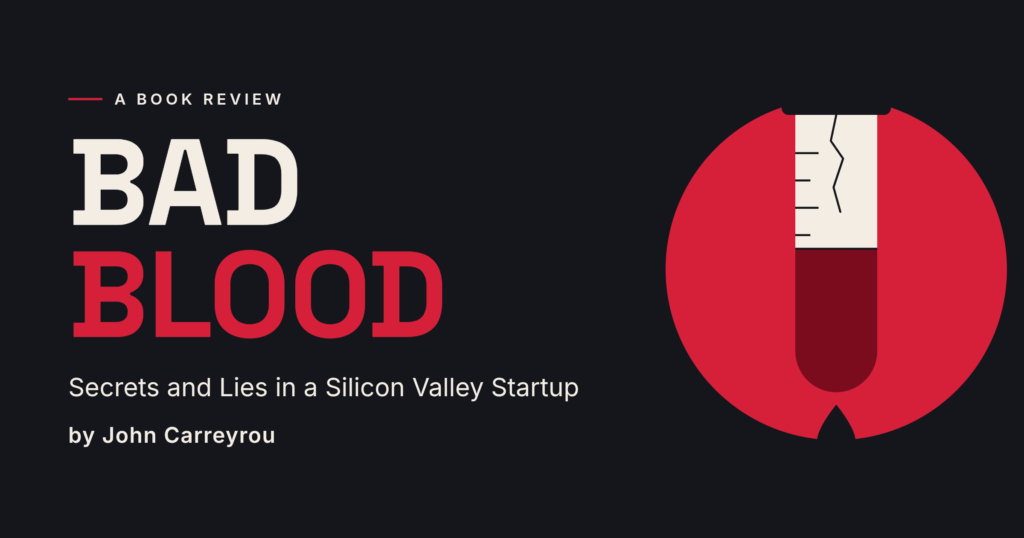
I finally finished Bad Blood by John Carreyrou. This book sat on my shelf for almost a year, and once I started reading, I could not put it down, not even for a second. I did not expect a non-fiction book to grip me like this.
A brief on Theranos and Elizabeth Holmes
If you have not heard of Theranos, here is a short background. Elizabeth Holmes dropped out of Stanford at 19 and started Theranos in 2003. She promised a revolutionary machine that could run hundreds of medical tests from just a few drops of blood taken from a finger prick. If it had worked, it would have changed healthcare forever.
The world believed her. Theranos raised hundreds of millions of dollars, and at its peak it was valued at about 9 billion dollars. Famous names sat on its board, and big companies such as Walgreens signed deals with it. Holmes appeared on magazine covers and TV shows, and people compared her to Steve Jobs.
The truth was very different. The technology did not work, and the company hid this for years. It even used other companies’ machines to run the tests while telling the world it was using its own. Patients received wrong results, and investors were misled. In 2015, John Carreyrou’s reporting in the Wall Street Journal exposed the truth, and the company collapsed soon after. Holmes was convicted of defrauding investors and sentenced to more than 11 years in prison.
My thoughts
I felt completely consumed by the book, and at the same time I felt sorry for the people who were hurt, especially the patients who received wrong results from a machine that was never ready. Holmes started with motivation, grit and one big disruptive idea. Somewhere along the way, her ambition moved away from the idea itself and towards money and fame. She got both in plenty, and the more people believed her, the bigger the lies became.
The real story of Theranos is nothing less than a thriller. How can people lie like this and raise so much money just by being confident about those lies? What surprised me most is that they got away with it for more than a decade. No one caught them red-handed, and more and more people fell for the story.
What stayed with me
The part that made me sad was the lack of a moral compass. Is this the case with all founders? We have seen scandals in many technology companies. Is it a phenomenon that people lose their morality when the cash starts to flow? We rarely find founders and startups that stand for morality and humanity first.
Today, I see the AI disruption happening all around us, and sometimes these technologies feel morally skewed. Many founders are in a race to reach the finishing line first. In a world like this, is it too much to ask for morality? When people lose that conscience, terrible things happen.
My recommendation
I highly, highly recommend this book to everyone. Yes, it is non-fiction, but please do not assume it will be boring. It is well researched, beautifully written, and hard to put down.